Introduction
An insulated bulkhead is a thermal partition installed inside a refrigerated truck or trailer to separate cargo areas and control temperature transfer. It is commonly used to improve temperature stability, reduce refrigeration load, and support multi-temperature transportation. In this guide, we’ll explain what an insulated bulkhead is, how it works, its key benefits, common types, and solutions for a refrigerated vehicle.
What Is an Insulated Bulkhead?
An insulated bulkhead, also known as a reefer truck divider or refrigerated truck partition, is a removable thermal partition installed inside a refrigerated truck or trailer.It divides the cargo space into multiple temperature-controlled sections, allowing operators to transport frozen, chilled, and ambient goods together in one vehicle.

Why Are Insulated Bulkheads Important for Refrigerated Trucks?
Insulated bulkheads are essential for maintaining stable temperatures inside refrigerated trucks, especially when transporting frozen and temperature-sensitive goods. By dividing the cargo area and reducing heat transfer, they help minimize temperature fluctuations, reduce refrigeration load, and improve energy efficiency. A properly designed bulkhead also helps maintain different temperature zones when needed, protecting cargo quality throughout transportation.

Multi-temperature shipping
A reefer truck partition allows one vehicle to transport different products requiring different temperature conditions.The main function of an insulated bulkhead in a refrigerated truck is to block or control airflow and divide the cargo compartment into different temperature zones. Insulated bulkheads can generally be classified into two types: standard insulated bulkheads and temperature-controlled bulkheads. Temperature-controlled bulkheads are equipped with additional temperature control units and fans, allowing precise regulation of the temperature within each separated zone.
Energy Efficiency
An insulated bulkhead helps reduce the volume of the refrigerated area when the cargo space is not fully loaded. By cooling a smaller compartment, the refrigeration unit works more efficiently, which can help reduce fuel consumption and operating costs.
Cargo Protection
By separating different temperature zones and limiting air exchange between compartments, an insulated bulkhead helps maintain stable temperatures. This reduces the risk of temperature fluctuations and helps protect temperature-sensitive products such as fresh food, frozen goods, and pharmaceuticals.
How Does an Insulated Bulkhead Work?
The insulated bulkhead is installed in the middle of the refrigerated truck body, dividing the original single compartment into two independent temperature-controlled zones:
1. Front section: Located closer to the refrigeration unit, this area is maintained at -18°C as a frozen compartment for transporting frozen meat, seafood, and other frozen products.
2. Rear section: This independent chilled compartment maintains a temperature of 0–5°C for transporting fresh produce, dairy products, and other fresh goods.
Improving Air Separation and Temperature Stability
The insulated bulkhead effectively separates the hot and cold airflows. The low temperature in the frozen compartment will not freeze or damage fresh products in the chilled section, while moisture from the chilled area is prevented from entering the frozen compartment and causing frost buildup on the refrigeration system.
For customized applications, some insulated bulkheads can be designed with reserved fan openings. By adding circulation fans and air guide curtains, an independent cold air circulation system can be created for the rear compartment, providing more precise temperature control.
How We Manufacture High-Performance Insulated Bulkheads?
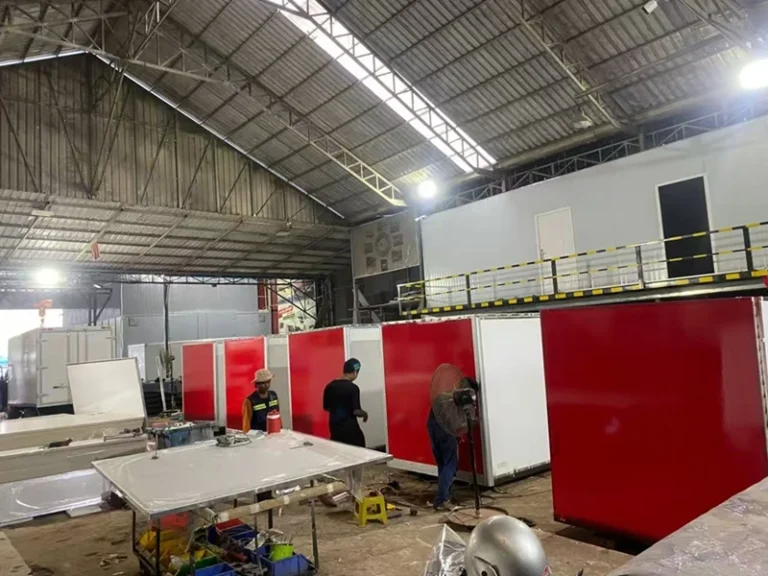
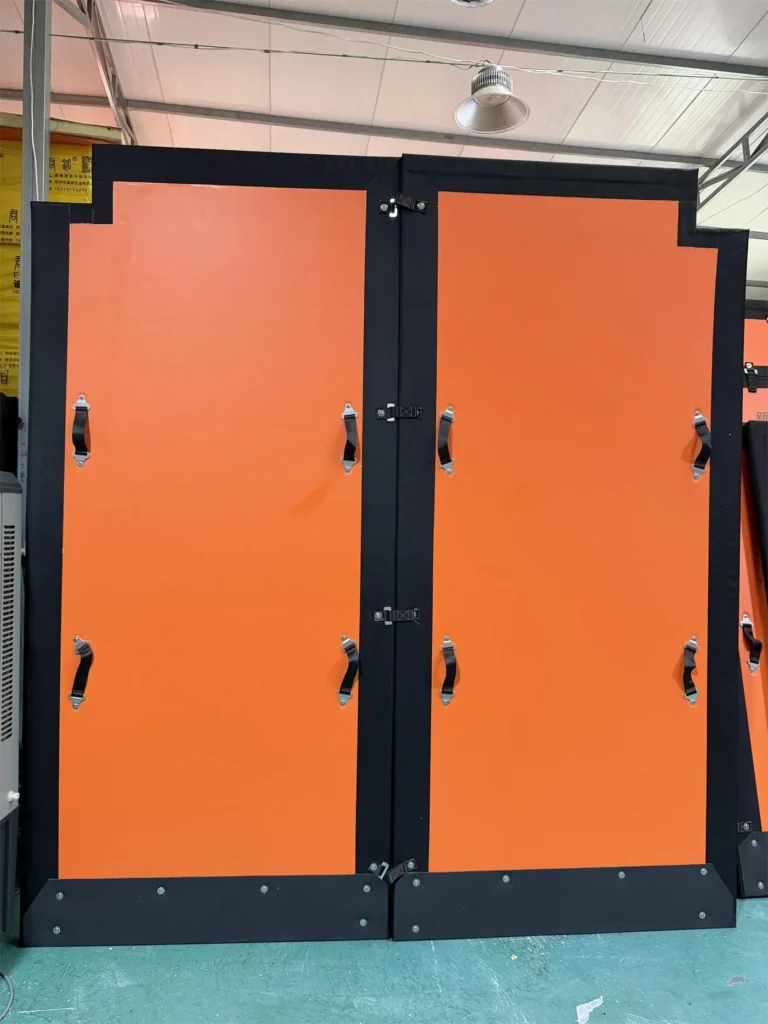
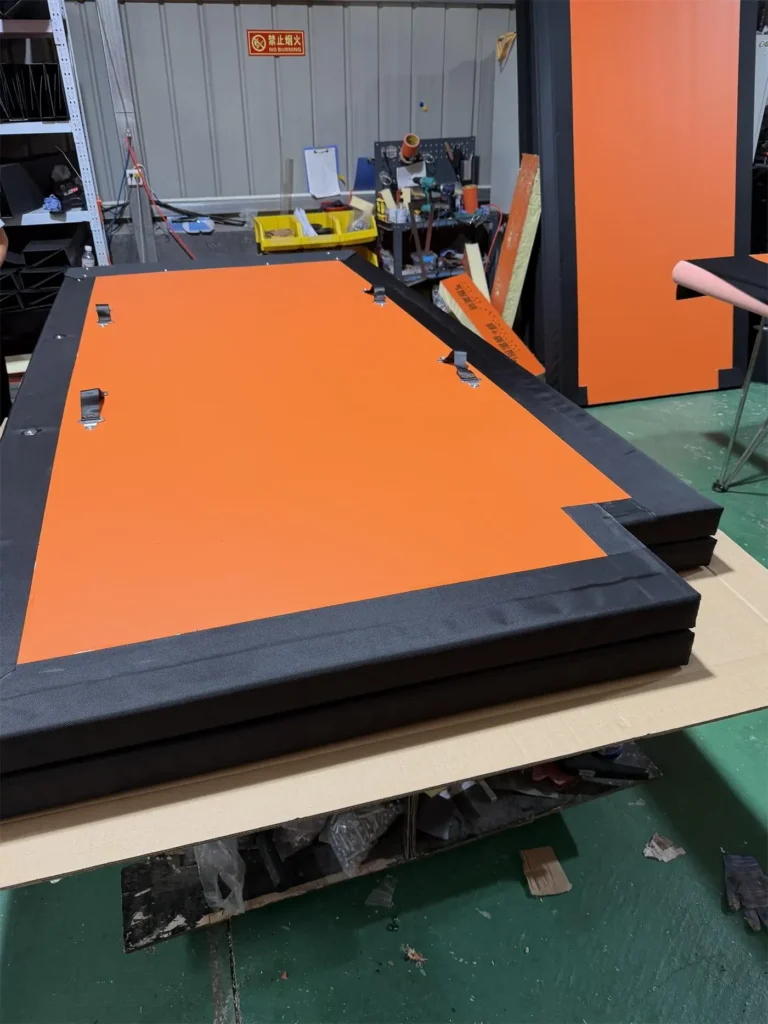
At Grey Whale, insulated bulkheads are manufactured with a focus on thermal performance, structural strength, and long-term durability. From material selection and panel forming to insulation, sealing, hardware installation, and final inspection, each production step is controlled to meet the requirements of refrigerated transport. Our manufacturing process allows us to provide reliable insulated bulkhead solutions for different vehicle sizes, temperature zones, and application requirements.
Insulated Bulkhead Panel Structure: Built for Thermal Performance
A high-performance insulated bulkhead depends on more than the insulation material itself. At Grey Whale, the panel is designed as a complete structure, combining the outer skin, insulation core, reinforcing elements, edge sealing, and hardware to provide reliable thermal separation and mechanical strength. The following section breaks down the main layers and components of the Grey Whale insulated bulkhead panel.
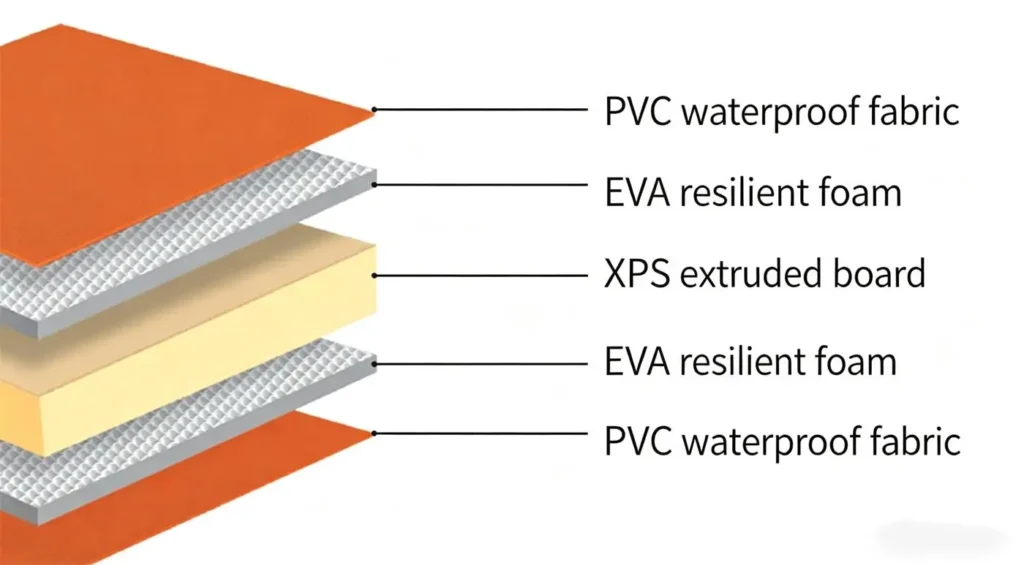
Lightweight Three-Layer Composite Panel Structure
Our insulated bulkheads use a lightweight three-layer composite panel construction, combining strength and insulation performance in one integrated structure.
The composite design provides:
- Excellent structural strength
- Lightweight construction
- Better resistance to moisture and environmental changes
- Long-term dimensional stability
Compared with traditional single-material partitions, composite panels offer better overall performance for commercial refrigerated vehicles.
High-Performance XPS Insulation Core
The insulation core uses XPS (Extruded Polystyrene) material with a thermal conductivity of 0.028 W/(m·K).
The XPS core provides:
Excellent thermal insulation performance
Low water absorption
Stable insulation properties over time
Resistance to shrinkage and deformation
This makes it suitable for refrigerated trucks, trailers, and temperature-controlled transportation applications.
Strong and Durable Panel Structure
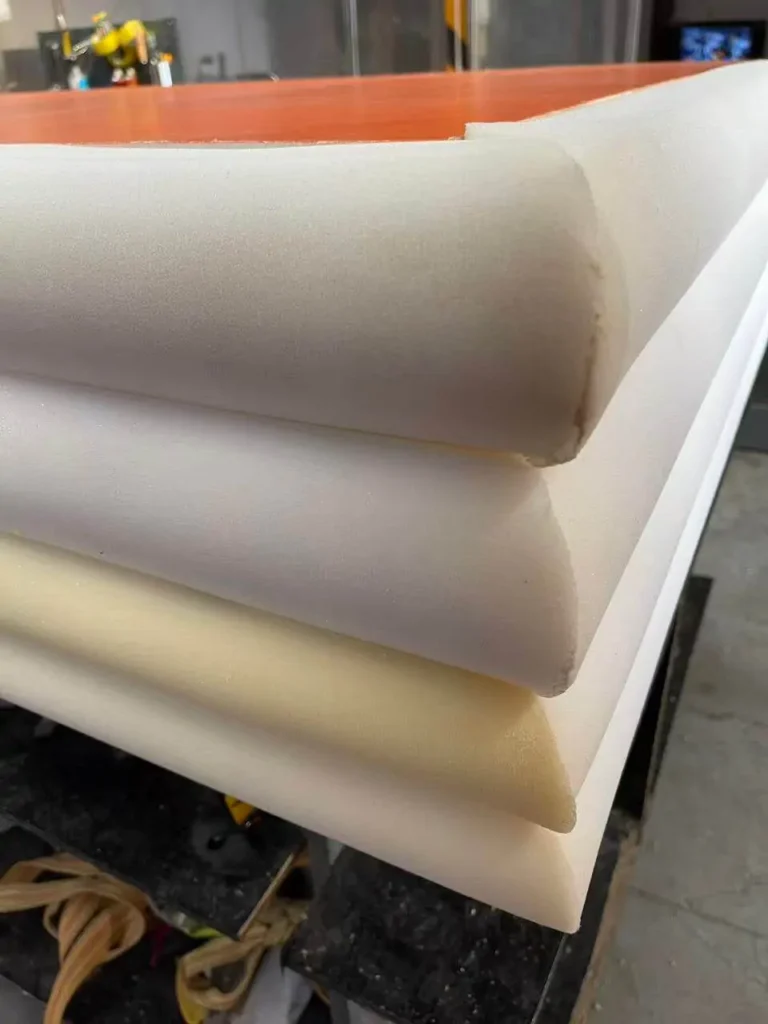
The panel has a compressive strength of over 500 kPa, providing excellent mechanical strength for daily commercial use.
- A strong structure helps the bulkhead withstand:
- Frequent installation and removal
- Vehicle vibration during transportation
- Long-term operation in demanding environments
Unlike low-quality insulation boards that may deform after extended use, our composite structure maintains its shape and performance over time.
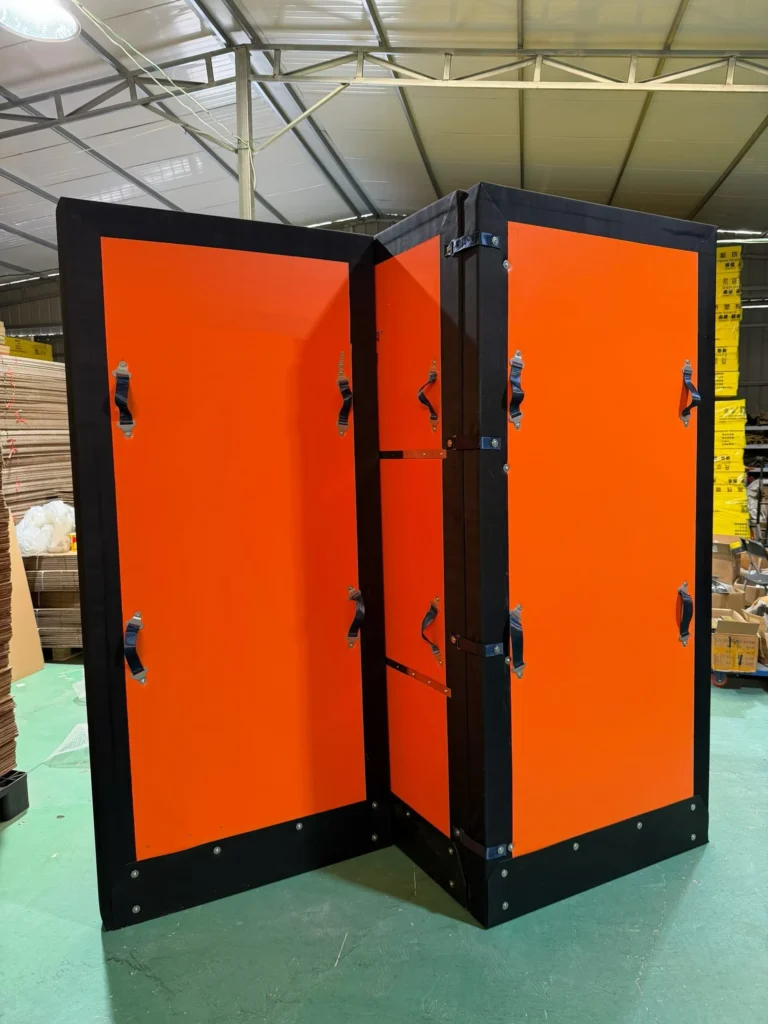
Improved Airtight Sealing Design
Temperature stability depends not only on insulation materials but also on sealing performance.
Our insulated bulkheads are equipped with high-quality sponge seals on both sides and the top to create an effective airtight barrier between the bulkhead and the truck body.
This helps:
- Reduce cold air leakage
- Improve temperature retention
- Increase refrigeration efficiency

Corrosion-Resistant Hardware Components
For better durability in refrigerated environments, the handle system uses 304 stainless steel screws with aluminum alloy backing plates.
These materials provide:
- Excellent corrosion resistance
- Long service life
- Reliable performance under humid conditions

Durable Export-Grade Oxford Fabric Edge Covering
The edge covering is made from export-grade Oxford fabric, selected for its wear resistance and durability.
The fabric design offers:
- Better protection of the sealing edge
- Reduced friction during installation
- Easier daily operation
- Longer service life

How to Choose the Right Insulated Bulkhead Thickness and Type?
Choosing the right insulated bulkhead depends on several factors, including the refrigerated truck size, cargo type, required temperature range, and operating conditions.
We commonly provide 55mm and 85mm insulated bulkheads. Different thicknesses can be selected according to vehicle size and insulation requirements.
Standard Folding Insulated Bulkhead
The Standard Folding Insulated Bulkhead is built for refrigerated trucks that need a practical way to separate cargo areas and control temperature transfer. The folding design makes it easy to open and move aside when loading or unloading, while the insulated panel helps maintain a stable temperature between different sections of the cargo space. It is a straightforward solution for everyday refrigerated transport operations.
For Frozen and Chilled Compartments
The standard folding insulated bulkhead is the most common solution for refrigerated trucks. It is mainly used when one vehicle needs to transport both frozen and chilled products at the same time.
The bulkhead divides the cargo area into two independent temperature zones:
- The front section is usually used as a frozen compartment, maintaining around -18°C for products such as frozen meat and seafood.
- The rear section is used as a chilled compartment, normally maintained at 0–5°C for fresh vegetables, dairy products, and other chilled goods.
By separating the airflow between the two areas, the bulkhead helps prevent cold air from the frozen section affecting fresh products, while reducing moisture transfer between compartments.
This type is widely used for food distribution, supermarket delivery, and multi-temperature transportation.

Temperature-Control Fan Insulated Bulkhead
The Temperature-Control Fan Insulated Bulkhead combines an insulated partition with an integrated circulation fan to improve temperature distribution inside refrigerated vehicles. The fan helps move cold air between separated cargo areas, reducing temperature differences and supporting more even cooling. It is suitable for applications where stable temperature control is required across multiple cargo zones.
For Two Frozen Temperature Zones
For some applications, customers need to transport frozen products that require different temperature levels within the same vehicle.
In this case, a temperature-control fan insulated bulkhead can be used.
Compared with a standard partition, this design adds a circulation fan system and airflow guidance structure. The fan helps distribute cold air more evenly, allowing each compartment to maintain a more stable frozen environment.
This solution is commonly used for:
- Frozen seafood transportation
- Meat products with different storage requirements
- Long-distance cold chain logistics
The additional airflow management helps improve temperature uniformity and provides better control for demanding frozen applications.

Insulated Bulkhead with Access Door
The Insulated Bulkhead with Access Door combines temperature separation with convenient access between cargo areas. The built-in door allows drivers or operators to move between sections without removing the entire bulkhead, while the insulated panel helps limit heat transfer and maintain the required cargo temperature. It is a practical option for refrigerated trucks with frequent loading, unloading, or multi-zone operations.
Designed for Frequent Loading and Unloading
In daily delivery operations, drivers often need to access cargo from different sections of the truck.
An insulated bulkhead with a small access door allows operators to reach the cargo area without fully opening the entire partition.
This design helps reduce unnecessary cold air loss and improves loading efficiency, especially for frequent delivery routes such as supermarkets, catering services, and food distribution.

Customized Reefer Truck Partition Solutions
Every refrigerated truck has different dimensions and temperature requirements. Therefore, we provide customized reefer truck partition solutions based on your vehicle size, cargo type, and cold chain needs.
We can customize:
- Bulkhead thickness (55mm / 85mm)
- Folding structure
- Fan-assisted cooling design
- Access door configuration
- Sealing system
With experience, we help customers select the right insulated bulkhead solution for frozen, chilled, and multi-temperature transportation applications.

Mia Jia
Technical Solutions Specialist
With over 6 years of experience in industrial manufacturing and cargo securement, Mia Jia specializes in delivering practical, cost-efficient solutions for truck body builders and global logistics fleets.