Introduction
Choosing the right insulated bulkhead for a refrigerated truck involves more than matching the truck dimensions. The best solution depends on the required temperature zones, cargo type, insulation material, panel thickness, bulkhead weight, sealing performance, installation method and the overall refrigeration and airflow system.
For most multi-temperature refrigerated applications, the first step is to define how the cargo space will be used. Once the temperature requirements and operating conditions are clear, it becomes easier to select the right bulkhead type, insulation material and configuration.
What Is an Insulated Bulkhead?
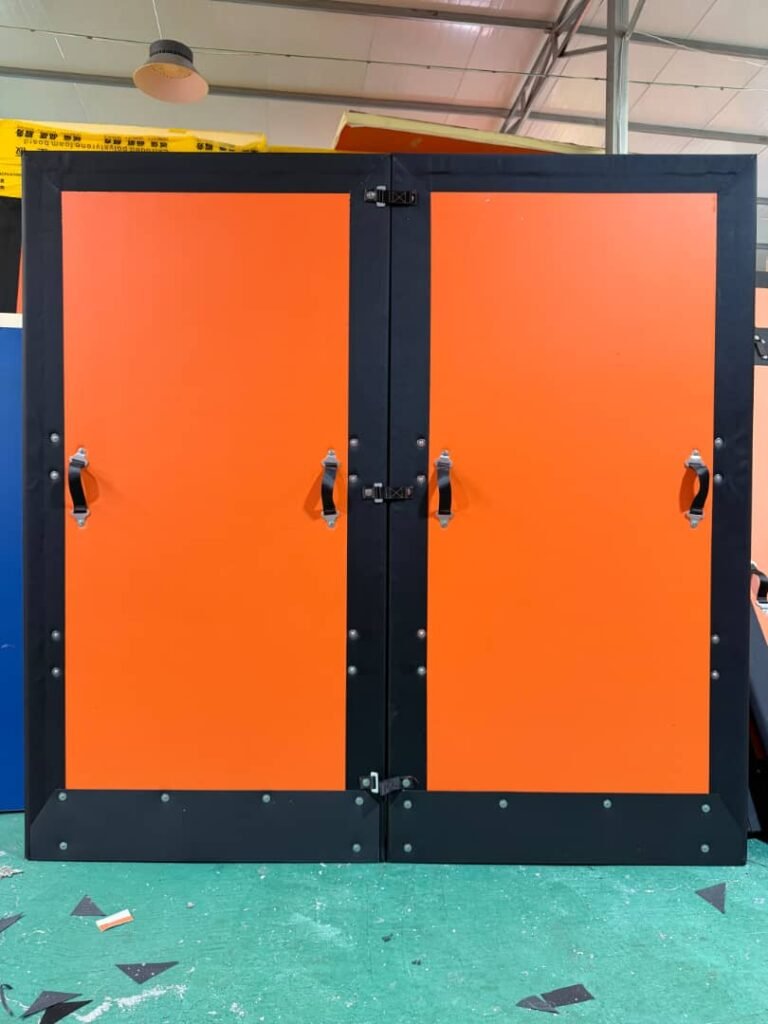
An insulated bulkhead is a fixed, removable or folding insulated partition installed inside a refrigerated truck or trailer. Its main purpose is to divide the cargo space into separate sections and reduce heat transfer between different temperature zones.
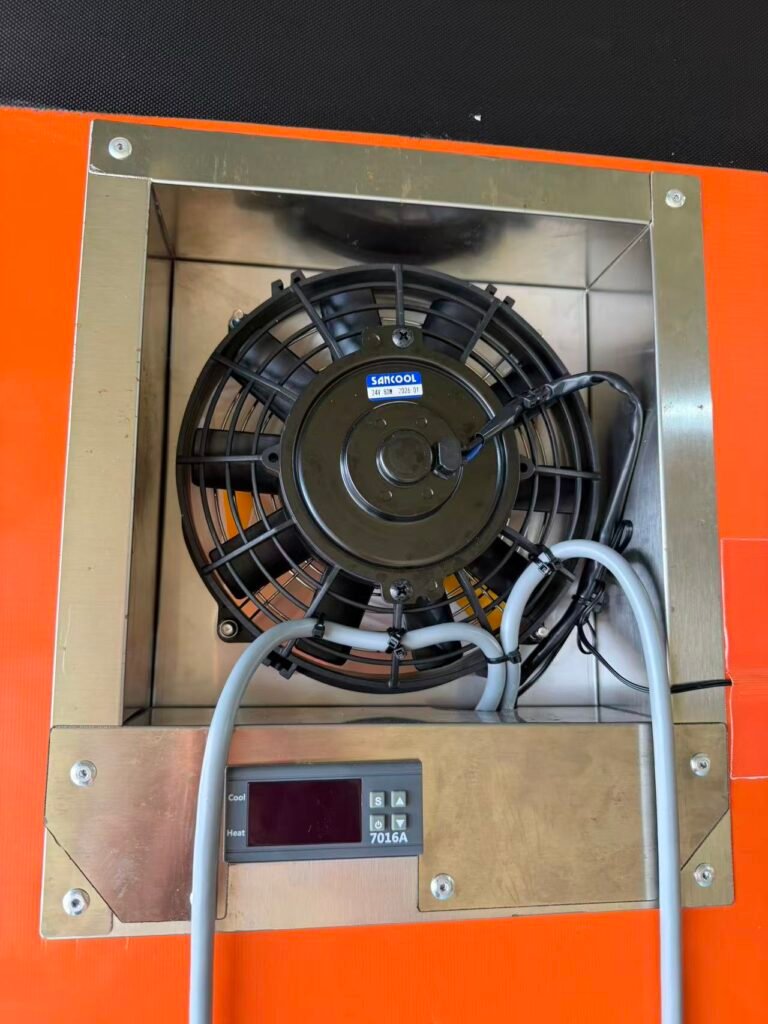
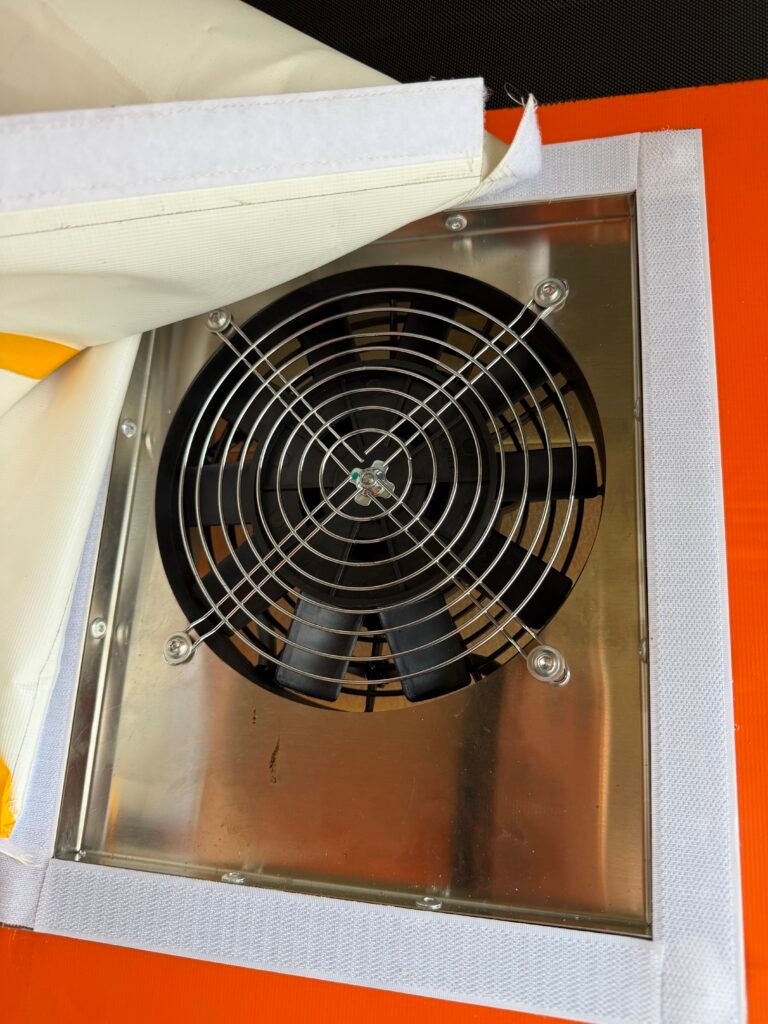
Depending on the application, an insulated bulkhead can include a folding mechanism, an access door or a thermostatic fan. It is commonly used in multi-temperature refrigerated trucks that need to carry products with different storage requirements.

(For details, please view this article: What Is an Insulated Bulkhead? The Complete Guide for Refrigerated Trucks)
Quick Guide: Which Insulated Bulkhead Should You Choose?
The following guide provides a quick starting point. The final configuration should always be based on the actual vehicle, temperature requirements and refrigeration system.
| Your Application | Recommended Solution |
|---|---|
| Frozen + Chilled | Consider a thermostatic fan bulkhead together with an appropriate refrigeration and airflow configuration. |
| Frozen + Dry / Ambient | A folding insulated bulkhead can help separate the two areas while keeping the cargo space flexible. |
| Frequent movement between compartments | Consider a bulkhead with a properly sealed access door. |
| Regular commercial use | XPS can provide a good balance of insulation, strength and relatively low weight. |
| A cost-effective use | High-density EPS is a very good, cost-effective option. |
| Temporary or short-term use | EPE or another lightweight temporary insulation solution may be suitable, depending on the application. |
1. Start With the Temperature Requirements
The first factor when choosing an insulated bulkhead is the required temperature difference between the cargo zones. This affects the insulation level, sealing requirements, bulkhead design and refrigeration configuration.
Before selecting a bulkhead, define:
- Required temperature for each compartment
- Type of cargo being transported
- Temperature difference between the zones
- Required cargo volume for each zone
- Whether the temperature zones need to change for different delivery routes
Frozen + Chilled
This is one of the most common multi-temperature applications. One compartment may carry frozen products, while the other is used for chilled food such as dairy products, fresh produce or other temperature-sensitive goods.
Because there may be a significant temperature difference between the two compartments, the bulkhead should provide effective insulation and sealing to help reduce heat transfer.
Frozen + Dry
Some operators need to transport frozen products together with dry or ambient cargo. In this case, the bulkhead design should consider both thermal separation and the practical use of the dry compartment.
The partition position should be planned according to the required cargo volume, loading method and access requirements.
More Than Two Temperature Zones
Larger vehicles or more complex distribution operations may require two or more insulated partitions to create several cargo zones.
An insulated bulkhead alone does not independently control the temperature of each compartment. The final system design should also consider refrigeration capacity, evaporator arrangement, airflow, return-air design and temperature monitoring.
2. Choose the Right Bulkhead Type
The right bulkhead type depends mainly on the temperature zones, cargo type, loading method and how often the partition needs to be adjusted.
Thermostatic Fan Bulkhead — For Frozen + Chilled
A thermostatic fan bulkhead can be considered when one compartment is used for frozen products and the other for chilled products. The fan helps manage air circulation between the compartments when required as part of the overall temperature-control design.
This solution should be evaluated together with the refrigeration capacity, airflow path and actual temperature requirements of the vehicle.
Up & Down Folding Bulkhead — For Flexible Cargo Space
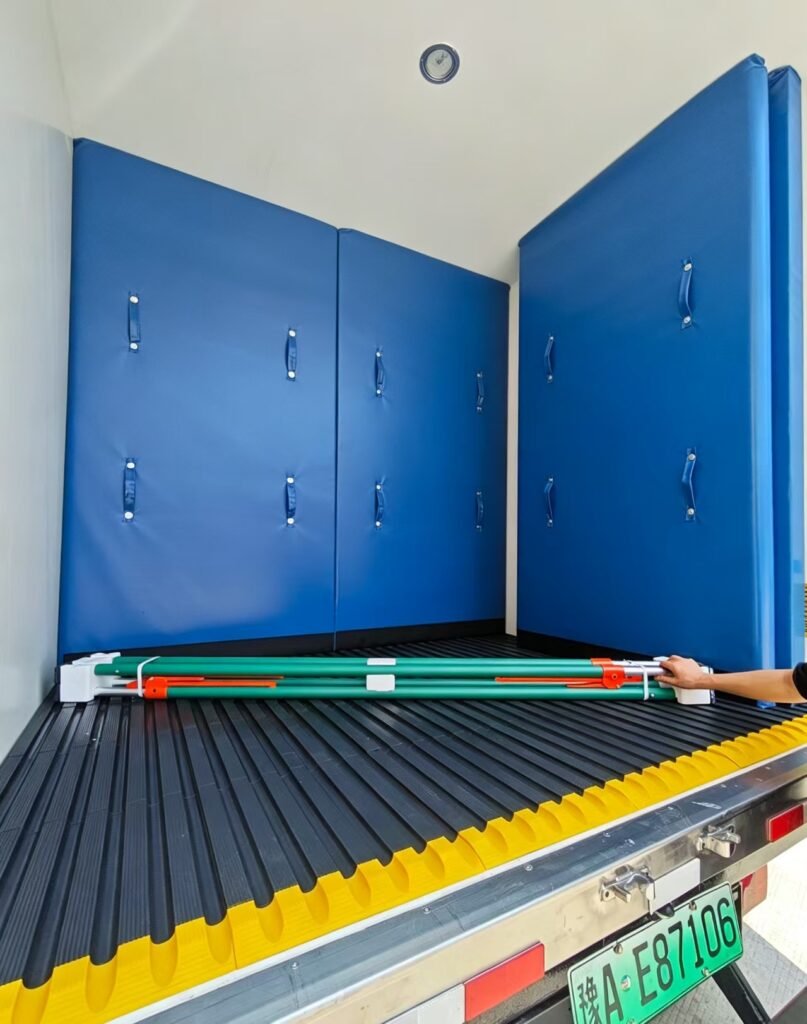
An up & down folding bulkhead can be lowered when a separate temperature zone is required and folded upward when the full cargo space is needed.
It is a practical option for operators who need to change the internal cargo layout according to different delivery requirements.
Folding Insulated Bulkhead — For Frozen + Dry
A folding insulated bulkhead is commonly suitable for applications where frozen products need to be separated from dry or ambient cargo. The insulated panel helps reduce heat transfer between the two areas, while the folding design allows the operator to free up cargo space when the partition is not required.
Bulkhead With an Access Door — For Frequent Access
A bulkhead with a small access door allows drivers or workers to move between compartments without opening the main cargo doors.
When frequent access is required, the door frame and sealing system should be properly designed to minimize air leakage and maintain insulation performance.
Our recommendation: Start with the required temperature zones and actual operating conditions. For Frozen + Chilled, a thermostatic fan design may be considered; for Frozen + Dry, a folding insulated bulkhead can provide a more flexible solution.
3. Choose the Right Insulation Material
The insulation material directly affects thermal performance, weight, durability and cost. There is no single material suitable for every application. The right choice depends on how often the bulkhead will be used, the required temperature and the operating budget.
XPS — For Regular Commercial Use
XPS (Extruded Polystyrene) is a practical choice for reusable insulated bulkheads used in refrigerated transportation. It offers good insulation performance, low water absorption and good compressive strength while keeping the overall weight relatively low.
For most refrigerated trucks requiring regular commercial use, XPS can provide a good balance of thermal insulation, strength and weight.
High-Density EPS — A Cost-Effective Option
High-density EPS (Expanded Polystyrene) can be considered when the initial cost is an important factor. Compared with XPS, it is generally a more economical insulation solution while still providing basic thermal insulation.
It may be suitable for applications that do not require the bulkhead to withstand heavy daily use or for customers looking for a more budget-conscious solution.
EPE — For Temporary or Short-Term Thermal Separation
EPE (Expanded Polyethylene), commonly known as pearl cotton, is lightweight and relatively inexpensive.
It is generally more suitable for temporary or short-term thermal separation rather than long-term, heavy-duty insulated bulkhead applications that are repeatedly installed and removed over many years.

4. Consider Bulkhead Thickness and Insulation Performance
Bulkhead thickness should be selected according to the temperature difference between compartments, the insulation material and the available installation space.
A thicker panel can provide additional insulation, but thickness alone does not determine the overall performance. Material properties, panel construction, edge sealing and air leakage all affect the final thermal result.
Based on our standard configurations, XPS insulated bulkheads are commonly available in 55 mm and 85 mm thicknesses, while high-density EPS bulkheads are commonly 100 mm thick. The final thickness can be adjusted according to the vehicle dimensions, temperature requirements and actual application.
5. Consider the Weight and Ease of Operation
Bulkhead weight is especially important when the partition needs to be moved, folded or removed frequently. A heavy bulkhead may be more difficult to operate and can increase the risk of improper handling.
When choosing a removable or folding design, consider the balance between insulation performance, structural strength and ease of daily operation. The material, panel thickness, reinforcement and hardware can all affect the final weight.
6. Consider the Installation and Sealing Method
Installation and sealing can have a major impact on the real-world performance of an insulated bulkhead.
Removable Installation
A removable installation can provide greater flexibility when the cargo layout or temperature zones change regularly.
Fixed Installation
A fixed bulkhead may be more suitable when the vehicle operates with permanent temperature zones and the partition does not need to be moved.
Sealing Performance
Even a thick insulated bulkhead can lose effectiveness if gaps around the edges allow cold or warm air to pass between compartments. The side, top and bottom sealing areas should therefore be considered together with the panel itself.
For bulkheads with access doors or folding sections, the sealing design around moving parts is also important.
7. What Information Should You Give Your Supplier?
When purchasing a custom insulated bulkhead, providing the right information helps the supplier recommend a suitable design and prepare an accurate quotation.
- Truck or trailer dimensions — especially the actual internal width and height of the cargo body
- Temperature requirements — for example, Frozen + Chilled or Frozen + Dry
- Bulkhead type — thermostatic fan, folding, removable or access-door type
- Insulation material — XPS, high-density EPS or another required material
- Panel thickness — if there is a specific requirement
- Installation method and whether the bulkhead needs to be moved or removed frequently
If available, drawings or photos of the existing refrigerated body are also helpful. They allow the supplier to better understand the available installation space and recommend a more suitable custom insulated bulkhead solution.
FAQs
Conclusion
Choosing the right insulated bulkhead starts with understanding the required temperature zones and how the refrigerated truck will be used. The bulkhead type, insulation material, thickness, weight, installation method and sealing performance should all be evaluated as part of the overall refrigerated body and refrigeration system.
For a custom solution, providing accurate vehicle dimensions, temperature requirements and operating conditions will help determine the most suitable configuration.